ID Verify
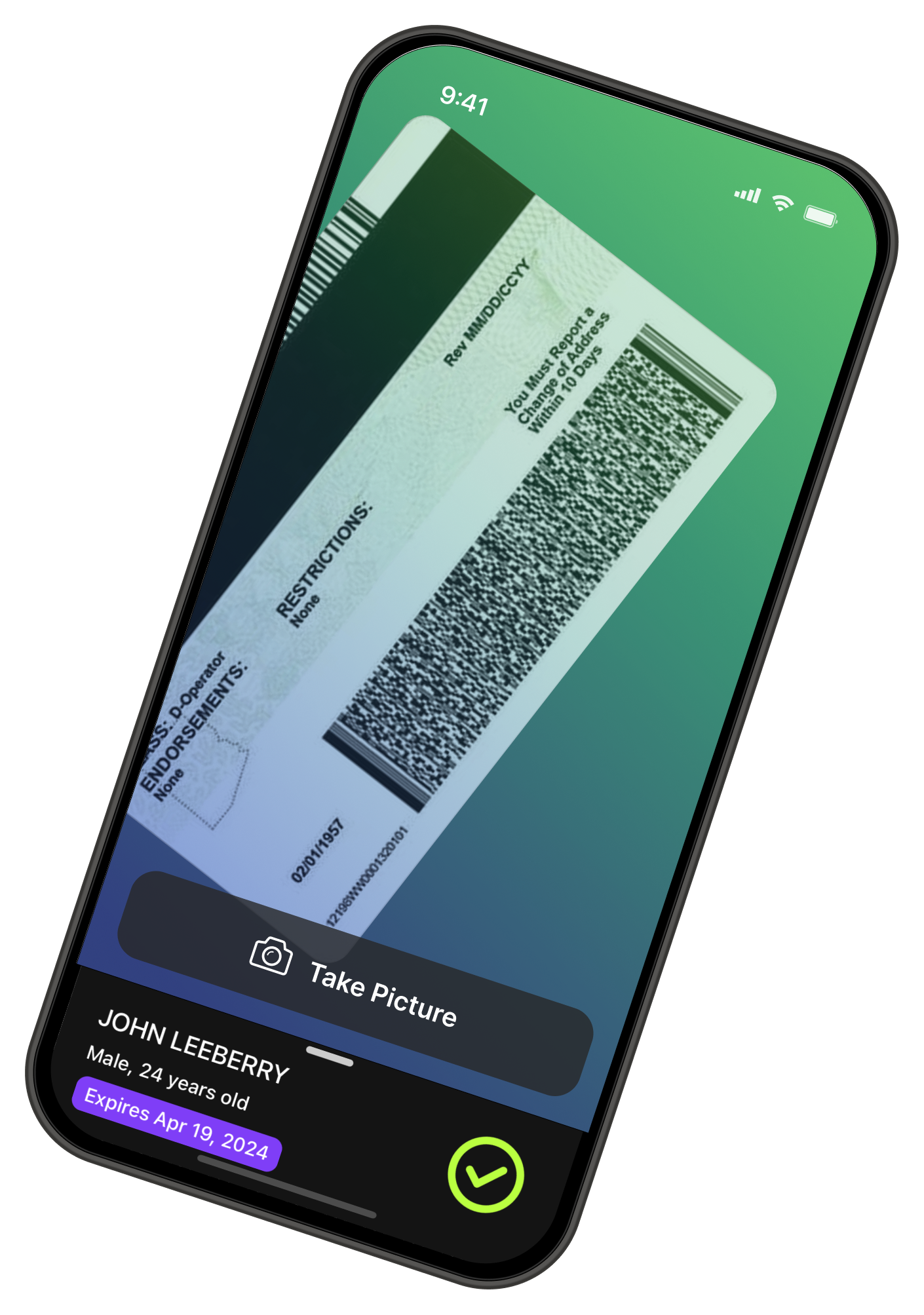
Building ID Verify: My Journey (Alongside Joseph Perez) from Idea to App.
I've always been drawn to projects that solve real-world problems. I love the rush of making life just a bit easier for someone—especially if that someone happens to be a small business owner, or even just a bouncer trying to keep a busy nightclub in check. That's exactly how I felt when I started developing ID Verify, an iOS mobile app that scans and validates driver's licenses and identification cards in real time.
Before diving into the technical details, I want to acknowledge Joseph Perez, my incredible collaborator on this project. From late-night code reviews to brainstorming sessions, his contributions were invaluable. Joseph continues to maintain and improve ID Verify today, ensuring we're always delivering the best possible experience.
The spark for ID Verify came from observing how many businesses still rely on manual ID verification. Whether at bars, clubs, or events, checking IDs can quickly become chaotic and error-prone. While some solutions existed, they often required expensive hardware or didn't integrate well with existing business tools. We saw an opportunity to create something better—a fast, accurate, mobile-first solution that could seamlessly integrate with other business systems.
Our Technology Journey We built ID Verify using React Native, which gave us the perfect balance of performance and cross-platform potential. For our backend, we chose Node.js with Sails.js, a robust MVC framework that provided the security features we needed for handling sensitive data. While we initially deployed on AWS, we later migrated to Fly.io for a more streamlined setup that better suited our real-time needs.
One of our most impactful features was the Square integration, which allows businesses to handle cover charges and other transactions right at the door. We also built comprehensive analytics that help owners track attendance patterns and plan their resources more effectively. Security was paramount throughout development—we implemented robust measures to protect sensitive information like driver's license data and payment details.
The development journey wasn't without its challenges. We had to master efficient barcode scanning in React Native and optimize our processing to happen locally on devices for better performance. The Square integration presented its own hurdles, particularly around edge cases like refunds and multi-location support. But with each challenge came valuable lessons and improvements to the platform.
What makes ID Verify special isn't just its technical capabilities—it's how it transforms the way businesses handle identity verification. Bouncers can quickly validate IDs, managers can track customer patterns, and owners can make data-driven decisions about their operations. The app eliminates the guesswork and human error that often plague manual ID checking while providing valuable business insights.
If you're curious to see ID Verify in action or learn more about how it could help your business, visit ID Verify. We're constantly evolving the platform based on user feedback and emerging technologies, and we'd love to hear your thoughts on where we should take it next.